Drigo SL Automated Mobile Robot
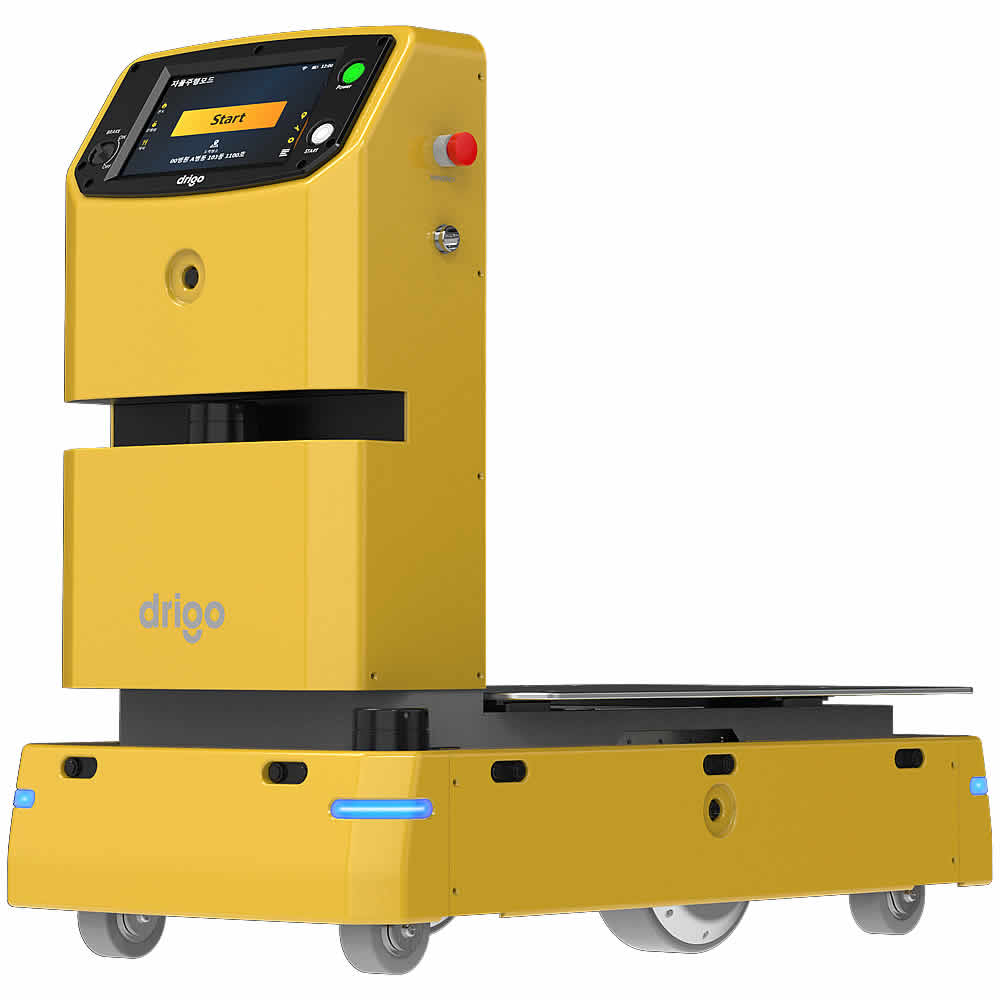 Model shown - DRIGO SL
 Flexible logistics solution
Product Information
Multi-purpose robotic transport unit for the distribution of Medicines, Linen, Cleaning supplies etc. From pharmacies, laundry, and storage areas to WHERE and WHEN supplies are required, day or night.
Providing accuracy, safety, security and precise delivery times. Drigo AMR units use advanced mapping technology and does not require installation of dedicated guidance systems into floors or ceilings or any structural modification to buildings
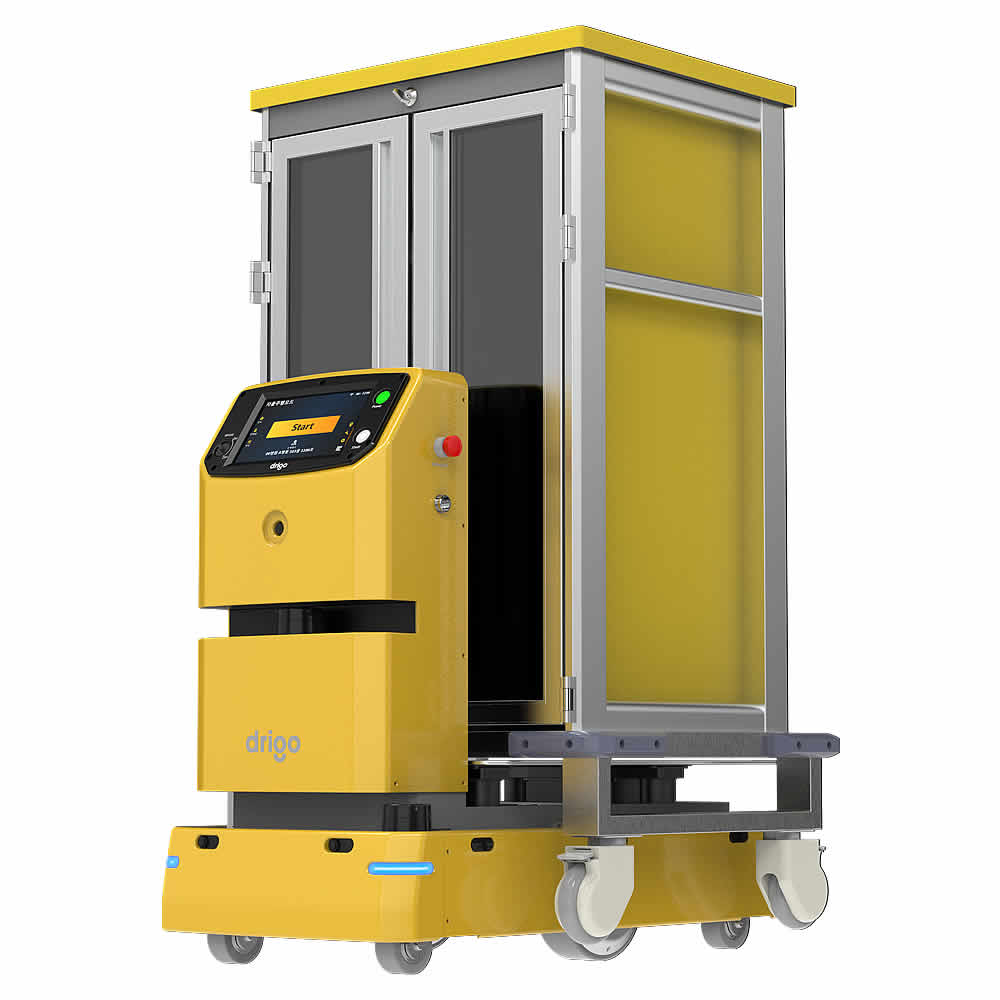
A Drigo SL can be used to transport dedicated MSCMK ‘Smart Box’s’ or existing containers and hot boxes*
Complete with Slope Compensation and Electromagnetic connection for Smart Boxes. The SL payload is 200 Kilograms.
*Existing containers may need modification.
Intelligent navigation
Drigo AMR’s navigate via maps created by integrated software or via pre-loaded facility drawings. This capability can be compared to a car with a GPS, when given the vehicle’s location and destination, generates the most direct route to the destination, making adjustments as required to avoid obstacles and delays as they occur in real time
This is similar to the way in which a Drigo AMR is taught locations to pick-up, drop-off and return. The Drigo uses data from onboard cameras, built-in sensors and laser scanners as well as sophisticated software that enables it to detect its surroundings and choose the most efficient route to the destination.
These units work completely autonomously and if beds, trolleys, people, or other obstacles appear in front of it, the Drigo will safely manoeuvre around them, using the best alternative route. This optimises productivity by ensuring that material flow and deliveries stay on schedule.
Features
- Automatically avoids obstacles, including people, during operation
- Uses WiFi or 5G telecommunication and standard communication protocols between lifts and automatic doors
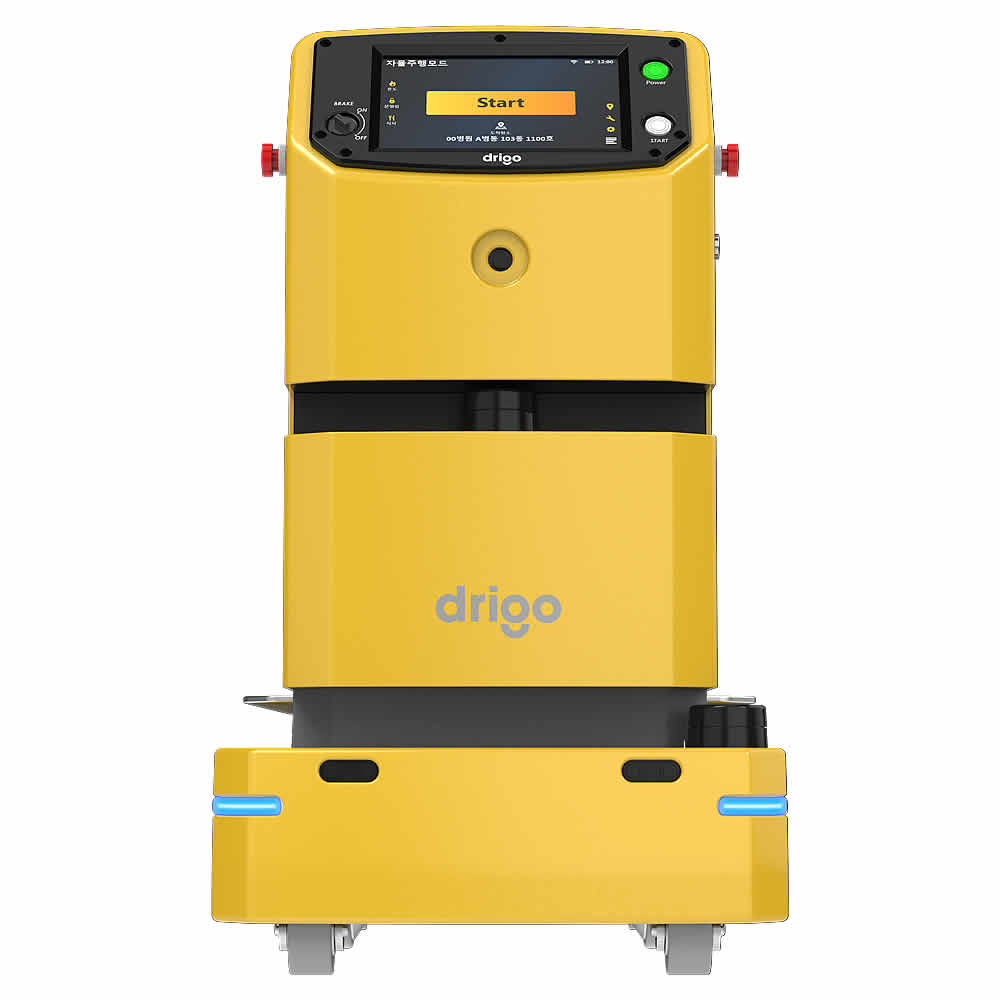
- Individual units are controlled by a large onboard touchscreen. Multiple units can be configured and operated by fleet control software, which automatically prioritizes orders and instructs the robot best located for a given task
- Reduces labour cost and human error for hospital materials distribution
- Highly adaptable and can be quickly re-mapped onsite to suit location changes and additional destinations
- The compact footprint of 500 mm wide x 1000 mm long, allows unrestricted access through doors and lifts
AMR v AVG – What is the difference?
Automated Guided Vehicle (AGV)
- AGV units have minimal on-board intelligence and can only obey simple programming instructions.
- To navigate, an AGV needs to be guided by wires, magnetic strips, or sensors, which are typically installed in floors and require extensive (and expensive) building works.
- An AGV is restricted to following fixed routes, which require additional cost and disruption if future changes become necessary. That means applications are limited and an AGV performs the same delivery task throughout its service life. Changes are simply too expensive and disruptive to be cost-effective.
- An AGV can detect obstacles in front of it, but it is not able to navigate around them, so it simply stops until the obstacle is manually removed.
Automated Mobile Robot (AMR)
- The Drigo AMR simply needs a software update to change its missions, so the same robot can perform a variety of different tasks at different locations, automatically adjusting mapping to meet changing environments and requirements.
- Drigo tasks can be controlled via the robot’s touch screen interface or fleet control software for multiple robots. The software automatically prioritizes tasks and instructs the most appropriate robot to undertake a mission, based on its position and availability.
- Once a mission is established, staff do not have to spend time supervising Drigos
- Onboard mapping allows an AMR to avoid obstacles (people, beds, equipment etc) and immediately adopt a new course to the specified destination.
- No structural building work or renovations changes are required to implement one or multiple Drigos.
- Fast commissioning, training, and onboard remapping.
- The Drigo AMR is very agile and can make directional changes en-route.
- If a hospital department is moved or a new process added, new maps of the building can be quickly and easily uploaded, or the Drigo can re-map onsite.
- This capability gives organizations full ownership of the robot and its functions. Instead of being constrained by inflexible AGV infrastructure, operators can easily redeploy the robot themselves as operational needs evolve.
- Although Drigo AMRs include more advanced technology than AGVs, they are typically a less-expensive solution.
- A Drigo does not need wires, magnetic stripes, or other costly modifications to the building infrastructure, so it is faster and less expensive to get AMRs up and running, with no costly disruption to operations in the process.
- Because Drigos can be deployed quickly and easily, they add new efficiencies almost immediately. With low initial costs and fast implementation, they offer a fast return on investment, often in less than six months.
| Drigo AMR | Typical AGV | |
| Intelligent navigation. If an obstacle appears, the unit will change course and immediately remap the best route to the destination, using similar concepts to a car GPS | Fixed routes. If an obstacle covers the control stripe, or the stripe breaks, the unit stops until the obstacle is removed or stripe repaired | |
| Highly flexible, unit software can be changed to update or completely change missions | Few applications, tasks are inflexible once set | |
| No building work required to floors or ceilings. | AGV units require installation of wiring and magnetic strips imbedded in floors, subject to wear and connection breaks |
“Automation of internal logistics is a recurrent issue for both large and small companies. Why use employee resources to move materials around when you can automate these tasks and have employees focus on higher-value activities? By automating material transportation, organizations can optimize productivity and can schedule deliveries more effectively to reduce production bottlenecks.”
Reference: Mobile Industrial Robots (MiR)
Gallery images - click to view larger
Model Specifications
- Code: Drigo SL AMR
- Length: 1000
- Depth: 550
- Height: 800
- Power rating: 20amp/kW
Options
- Wireless fast-charging system for multiple robots from one charger
- Automatic contact charging
- 'SmartBox’ trolleys designed specifically for pharmaceuticals and linen, plus dressing cart for operating theatres